
 ALIBABA 13+ YRS
 GLOBAL SOURCE
Blog
Global Threads: A Guide to the World’s Natural Weaving Materials
05
Dec
Dec
In the world of handicrafts and home decor, woven products occupy a massive scale. While synthetic materials had their moment, the market is aggressively shifting back to roots—literally.
Every region in the world possesses unique strengths based on its native flora. These natural ingredients are the definition of sustainability: renewable, biodegradable, and traditionally managed through careful extraction and processing.
At Vang Lung, we understand this global landscape deeply. As we discussed in our previous article on combining handcrafted heritage with industrial scale, knowing your material is the first step in successful OEM and ODM manufacturing.
From the Mekong Delta to the forests of Madagascar, here is a comprehensive breakdown of the natural materials powering the global weaving industry.
1. The Heavyweights: Rattan and Bamboo
These two materials form the backbone of the global furniture and handicraft trade, and they are the primary materials we utilize to create durable, eco-friendly goods.
Rattan (The “Cloud” of the Jungle)
-
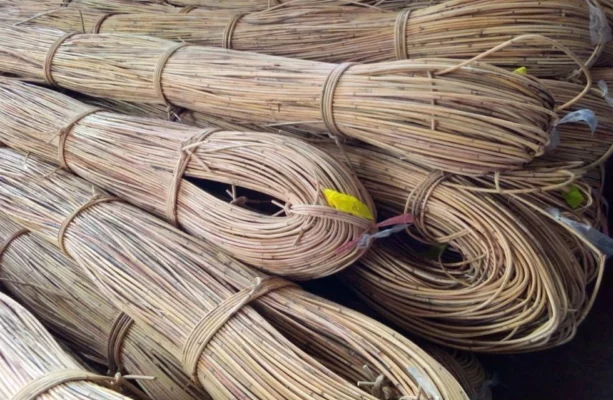
Source: Indonesia holds the title for the largest raw material reserves, followed by Malaysia, Vietnam, the Philippines, Laos, and Myanmar.
-
Production: While Indonesia has a distinct advantage in producing large-scale rattan furniture, Vietnam has carved out a niche in high-precision, intricate rattan weaving. As a dedicated Rattan basket wholesale supplier, we leverage these Vietnamese techniques to create stunning versatility.
-
We utilize the sturdy core of the plant for structure, seen in our hand-woven trays featuring leather strap accents.
-
For a more luxurious aesthetic, we combine rattan with other natural elements, such as distinctive blue fish mother-of-pearl inlays.
-
We also master the traditional, tight-knit styles, producing classic wicker weave designs with circular handles that stand the test of time.
-
Bamboo
-
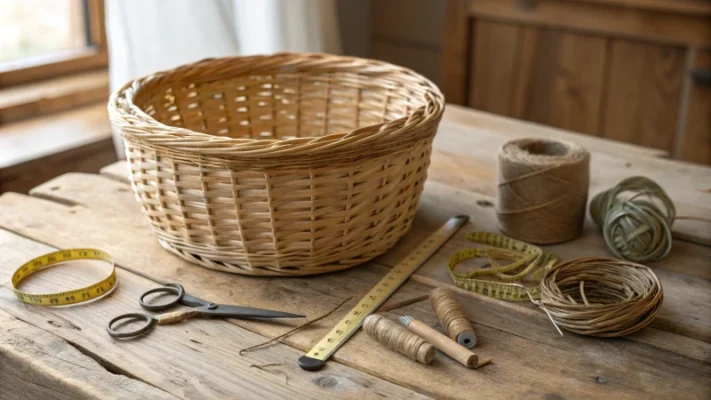
Source: China possesses the largest area of bamboo distribution, followed by India and Vietnam.
-
Production: The industry is split by technique. China dominates the industrial bamboo sector. Conversely, Vietnam holds the advantage in hand-knitted and woven bamboo handicrafts. As a premier Bamboo serving tray manufacturer, we utilize these specific weaving styles to create products that are both lightweight and incredibly strong.
-
Our artisans are skilled in creating complex twilled twos weave patterns, combining bamboo bodies with sturdy rattan handles.
-
We also utilize the coil technique to produce nested sets with a natural, coiled design, perfect for scalable export.
-
2. The Aquatic Fibers: Seagrass and Water Hyacinth
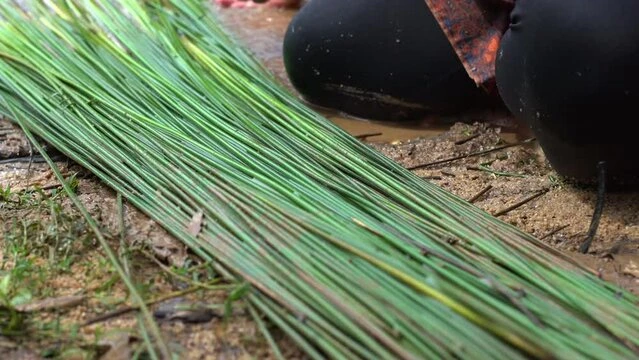
Harvested from coastal and river regions, these soft fibers are favorites for baskets and decor.
-
Seagrass: Distributed in China, Vietnam, and Bangladesh. China is currently a major manufacturer but imports a significant volume of raw seagrass from Vietnam to meet its production demands.
-
Water Hyacinth: Extremely popular in Vietnam (specifically the Mekong Delta). Vietnam has turned this invasive river weed into an “iconic” export advantage, creating soft, spongy weaves perfect for baskets and trays.
3. The Delta Specialties: Sedge, Rush, and Lepironia
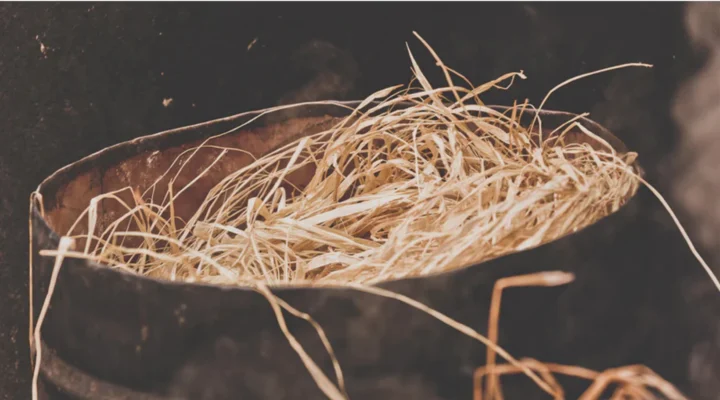
Specific to wetland ecosystems, these materials are historically significant in Southeast Asia.
-
Sedge & Rush: Widely distributed in the Vietnamese provinces of Ca Mau and Kien Giang. Originally used for sleeping mats, these durable fibers are now being adapted for baskets and fashion accessories.
-
Lepironia (Grey Sedge): Often found in the wetlands of the Mekong River delta. Like Sedge, this material is seeing a resurgence in eco-fashion and home goods.
4. The Agricultural Byproducts: Straw and Banana
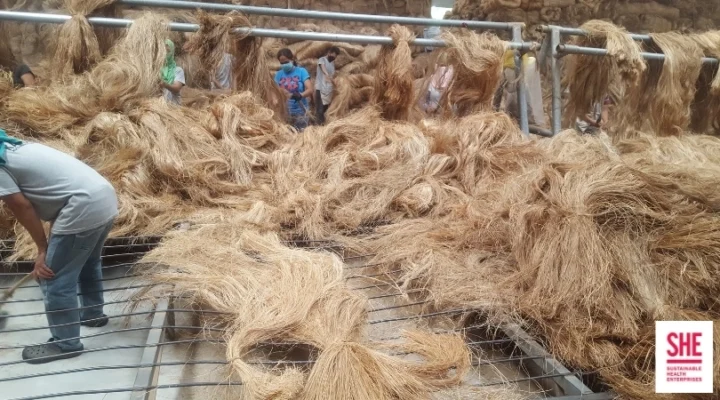
Innovation is turning farm waste into valuable woven goods.
-
Rice Straw: Weaving with straw is a critical environmental solution, reducing the air pollution caused by burning fields. IKEA has notably partnered with Indian suppliers to develop straw-based products.
-
Banana Fiber: Raw materials are abundant in South America, but the weaving profession there is still developing. Currently, Vietnam and Indonesia are the leaders in processing banana fiber into woven products.
5. The Strong Fibers: Jute, Sisal, and Raffia
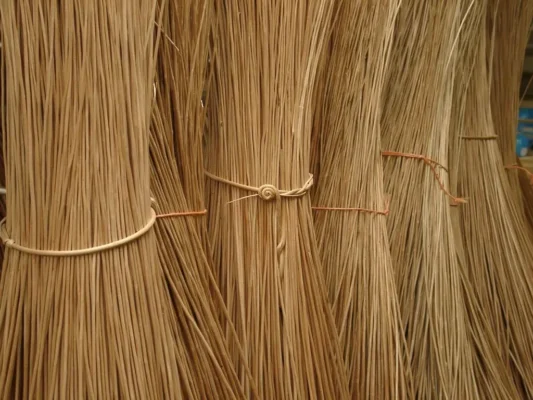
When durability and texture are required, these fibers are the top choice globally.
-
Jute: Bangladesh, India, and China hold the largest cultivation areas. Jute is essential for rugs, sacks, and heavy-duty backing.
-
Sisal: Known for its stiffness, Sisal is abundant in Kenya and Brazil, primarily used for weaving durable carpets.
-
Raffia: A palm fiber widely grown in African nations. It is soft, dyeable, and prized for high-end weaving and fashion.
6. The Niche and Artisanal Materials
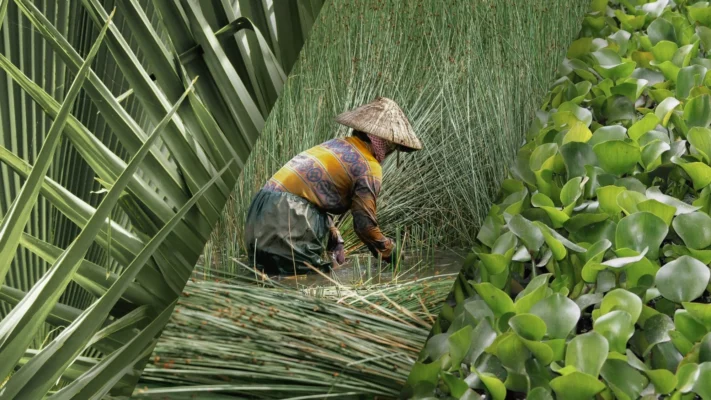
-
Fern (Guot): A fine, red-brown fiber found in Laos and Vietnam. It is incredibly durable and suitable for intricate weaving, though raw materials are becoming scarce.
-
Willow: The traditional standard for European basketry, widely used in China, France, and England.
-
Pineapple Leaves: Used for delicate weaving in the Philippines and Indonesia. In Vietnam, ethnic minorities traditionally use these fibers for textiles.
Conclusion
The “knitting” of natural materials is no longer just a local craft—it is a global supply chain. From the bamboo forests of Northern Vietnam to the riverbanks of the Mekong, the world is rediscovering the beauty of the hand-woven.
Whether you are looking for a Rattan basket wholesale supplier or a skilled Bamboo serving tray manufacturer, Vang Lung offers the OEM and ODM capabilities to bring these natural materials to your market.
