
 HOME
 ALIBABA 13+ YRS
 GLOBAL SOURCE
Blog
Quality Control in Natural Fibers: What Western Buyers Need to Know
19
Jan
Jan
In the global market, the demand for Eco-friendly home decor is no longer just a trend—it is a standard. For Western buyers sourcing from Southeast Asia, understanding the nuances of quality control is essential. Whether you are partnering with a Rattan basket wholesale supplier or a Bamboo serving tray manufacturer, the integrity of the product relies heavily on the source materials and the skill of the artisans.
As we discussed in our previous article on the hospitality shift and elevating guest experiences with sustainable bamboo, the market is pivoting toward materials that tell a story. However, that story must be backed by rigorous quality assurance, especially when dealing with Vietnam Manufacture standards that emphasize both durability and aesthetic appeal.
1. Material Consistency is Key
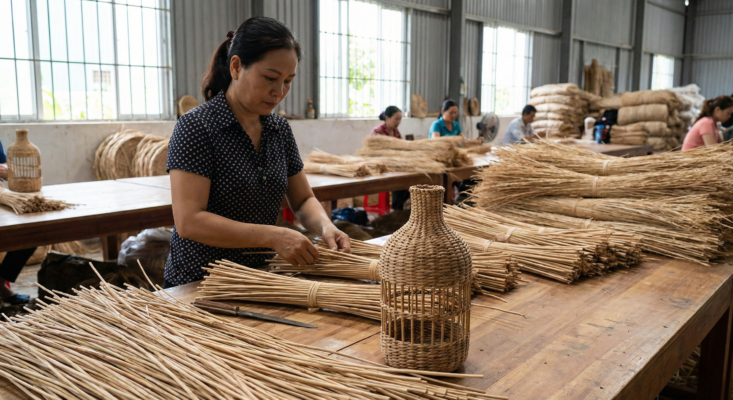
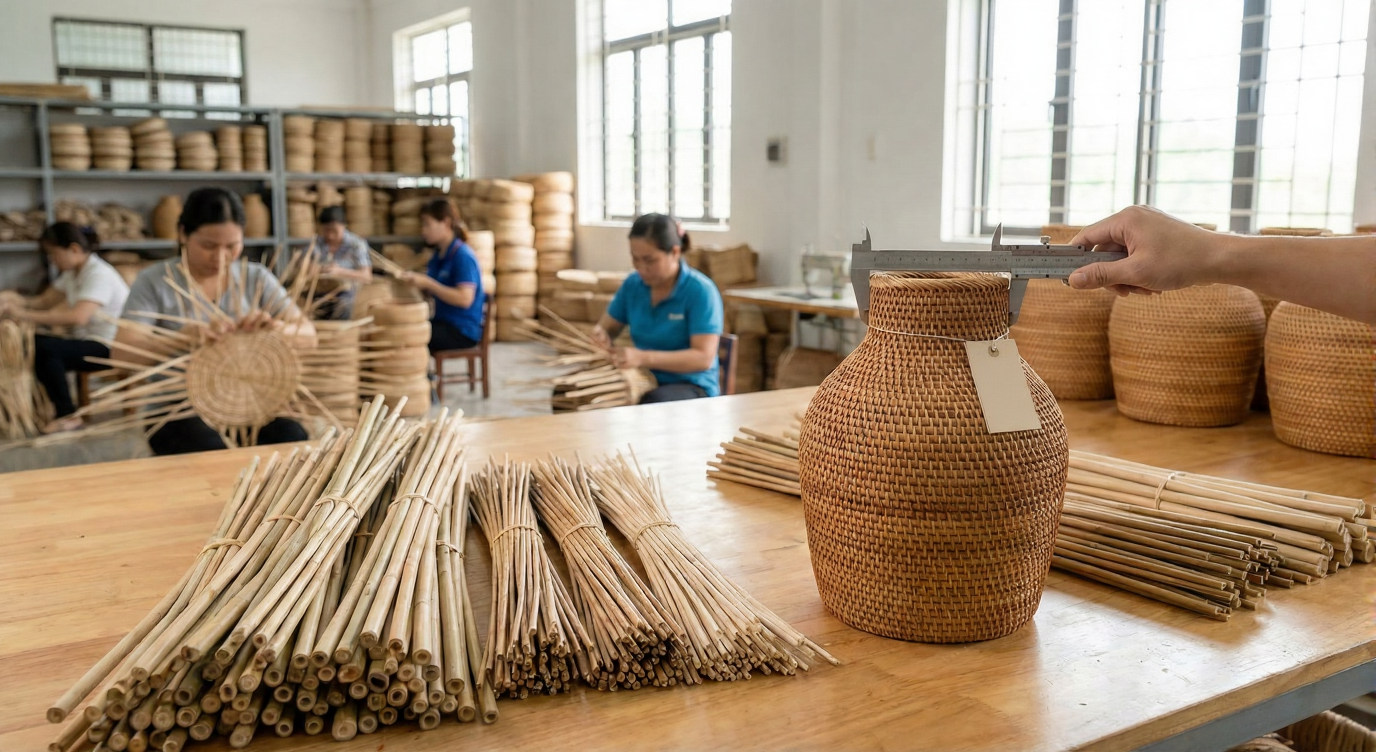
The first step in quality control begins before weaving even starts. Bamboo and Rattan are natural materials, meaning they are susceptible to variations in color, texture, and moisture content. A premium Handicraft exporter ensures that raw materials are properly treated to prevent mold—a critical factor for shipping to Western climates.
When we create rustic statement decor, we meticulously sort the rattan cores. This ensures that the final weave has a uniform look while retaining its natural charm, avoiding the “patchy” appearance that often plagues lower-quality mass production.
2. Precision in OEM and ODM Manufacturing
For buyers looking for custom solutions, our OEM and ODM manufacturing capabilities allow for precise replication of complex designs. Consistency is difficult to achieve in Handmade goods, but it is the mark of a true master artisan.
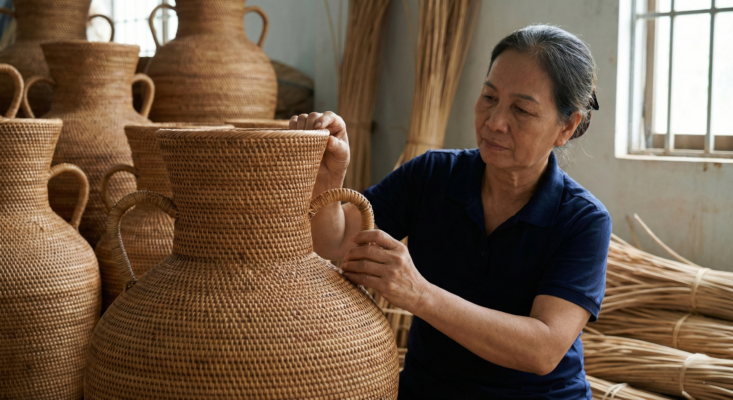
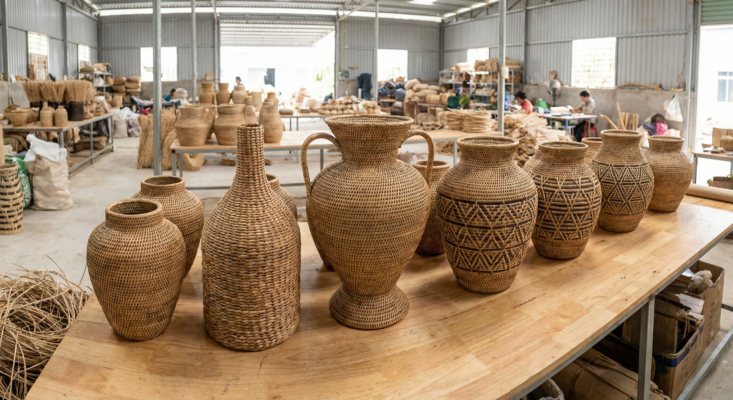
For instance, structural integrity is paramount when producing larger items. Our sturdy woven urns with handles are tested to ensure the handles can support weight without warping the body of the vase. This attention to detail ensures that the product is not just decorative, but functional.
3. The Art of the Weave
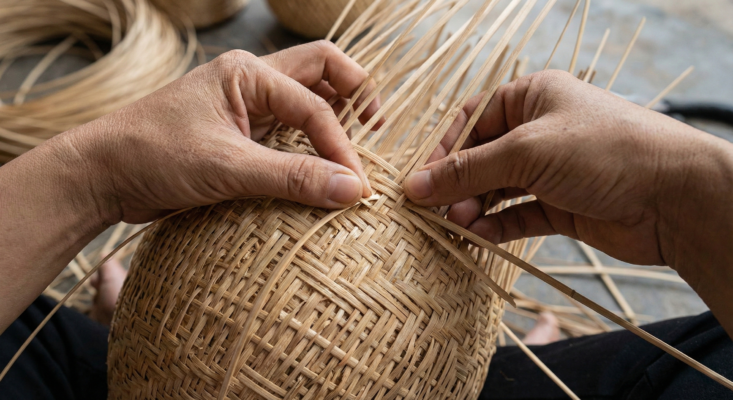
Western consumers appreciate the “perfectly imperfect” nature of hand-woven goods, but there is a fine line between rustic charm and poor workmanship. High-quality Handicraft requires tight, even weaving.
This is particularly evident in pieces that feature detailed designs. Achieving intricate geometric patterns requires an expert hand to ensure the motifs align perfectly around the circumference of the product. Similarly, shaping is critical; producing elegant bottle-style vases with narrow necks challenges the artisan to maintain symmetry while tightening the weave at the top—a feat that only experienced weavers can accomplish consistently.
Conclusion
Sourcing from Vietnam offers a unique advantage: access to generations of weaving heritage combined with modern manufacturing standards. By focusing on these quality control markers, Western buyers can confidently stock their shelves with Eco-friendly, Handmade products that stand the test of time.
